SEASONAL HIVE MANAGEMENT
Modified Single Deep.
A seasonal method.
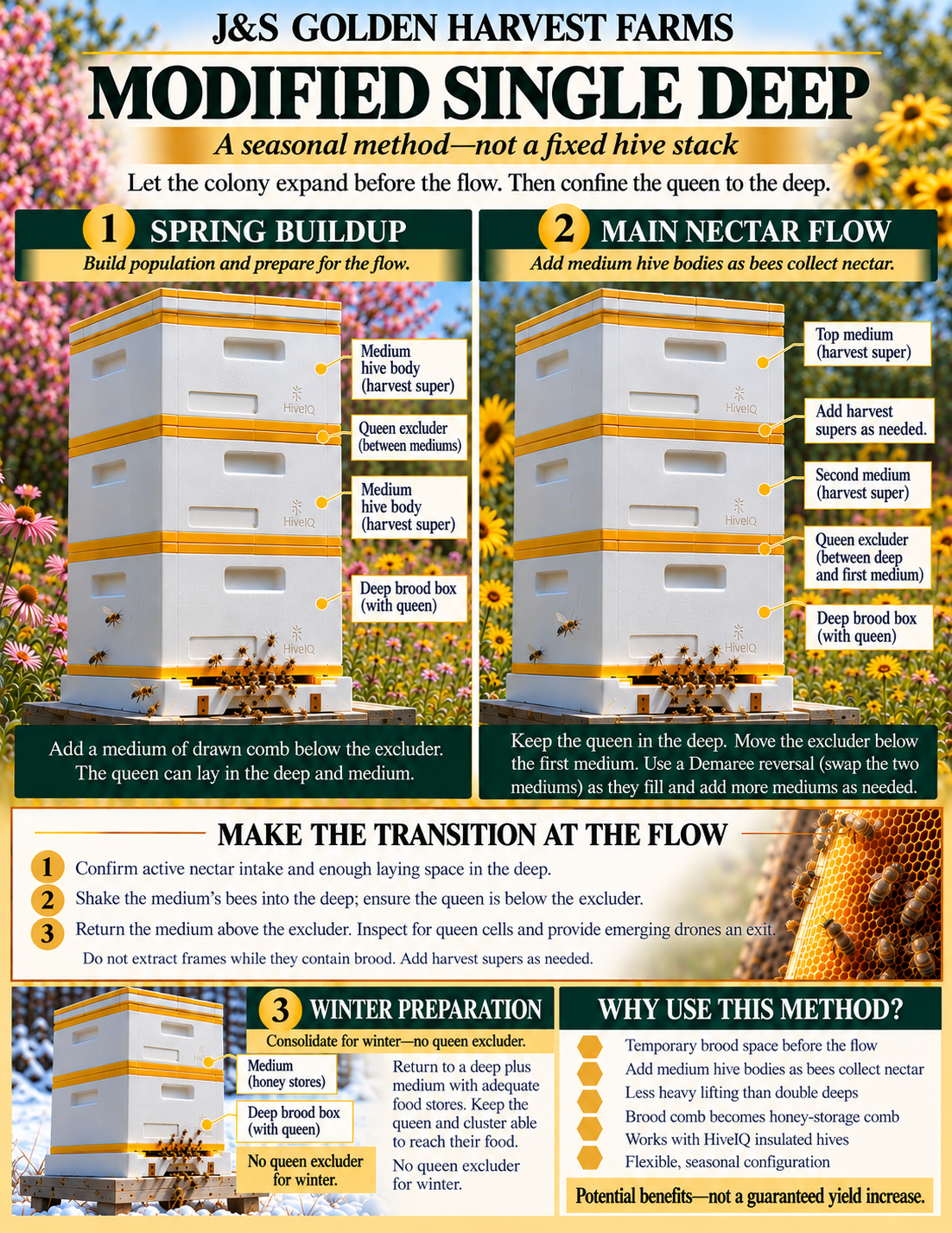
Let the colony expand before the nectar flow, then confine the queen to the deep brood box. This method changes with the season, giving the colony temporary brood space in spring and shifting that space toward honey storage during the flow.
1. Spring buildup: room to grow
Before the main nectar flow, the goal is to build population. Place a medium hive body with drawn comb above the deep brood box and below the queen excluder. The queen can lay in both the deep and this lower medium.
In the spring arrangement shown, a second medium sits above the excluder as a harvest super. Although the diagram labels both mediums as harvest supers, the lower medium is temporarily available for brood during buildup.
2. Main nectar flow: move the excluder
When the main flow begins, keep the queen in the deep and move the queen excluder directly above it, below the first medium. Both mediums now sit above the excluder, and additional harvest supers can be added as the bees collect nectar.
Make the transition at the flow
- Confirm the timing and space. Check for active nectar intake and enough laying space in the deep.
- Move the bees down. Shake the medium’s bees into the deep and ensure the queen is below the excluder.
- Return the medium above the excluder. Inspect for queen cells and provide emerging drones an exit.
Brood already present in the medium still needs to emerge. Do not extract frames while they contain brood. Add harvest supers as needed.
The infographic uses “Demaree reversal” for a medium-box swap. Here we call it a super rotation; this is not a description of the full Demaree swarm-control method. The queen remains in the deep below the excluder.
3. Winter preparation: consolidate the hive
For winter, return to a deep plus a medium with adequate food stores. Remove the queen excluder so the queen and winter cluster can stay together and reach their food.
The winter arrangement shown is a deep brood box with the queen, topped by a medium holding honey stores. There is no queen excluder for winter.
Why use this method?
The approach offers temporary brood space before the flow, then allows that comb to become honey-storage comb as brood emerges. Medium hive bodies provide room for incoming nectar and can mean less heavy lifting than managing double deeps.
The infographic also identifies compatibility with HiveIQ insulated hives and emphasizes a flexible seasonal configuration. These are potential benefits, not a guaranteed increase in honey yield. Hive setups and management should be adapted to local conditions and colony needs.